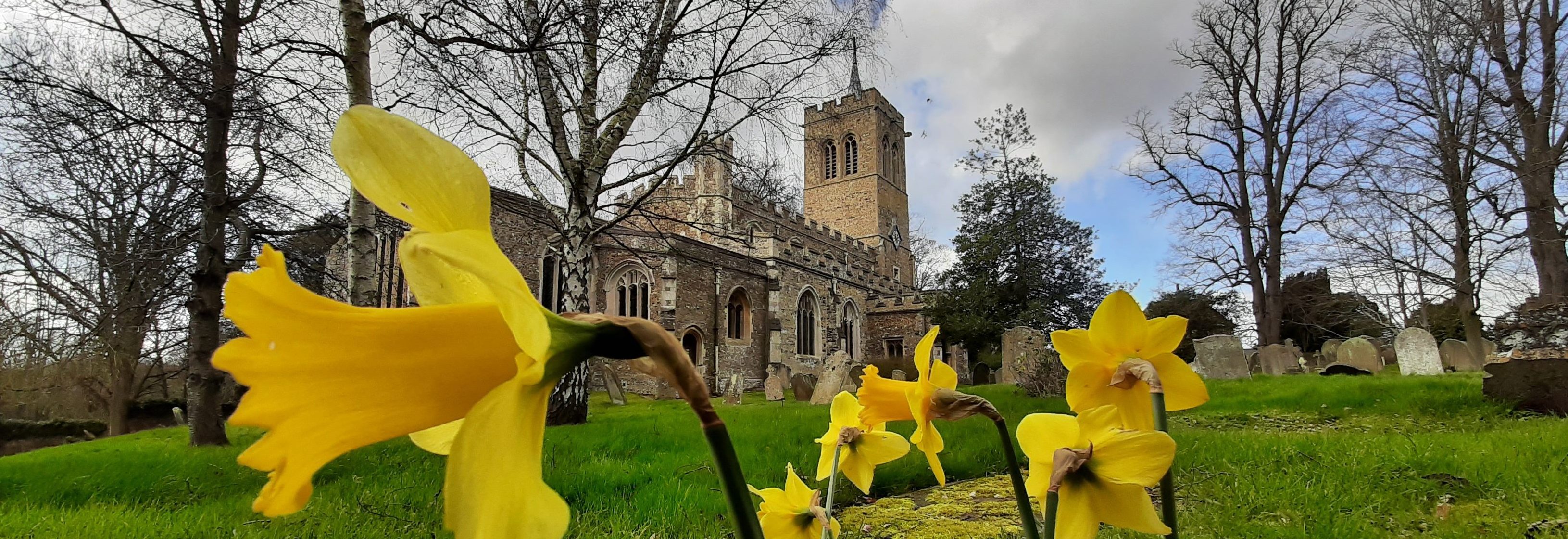
The autumn has been a busy time for us. Having hosted Norton ringers on the 12th October, we welcomed ringers from Hexham Abbey on the 26th. Their visit was arranged by Ruth Kemsley, one of our occasional visitors on a Thursday practice night. There were about a dozen in the group and they rang the usual mixture of Plain Bob and Grandsire, and invited Sheila and me to ring in some Stedman.
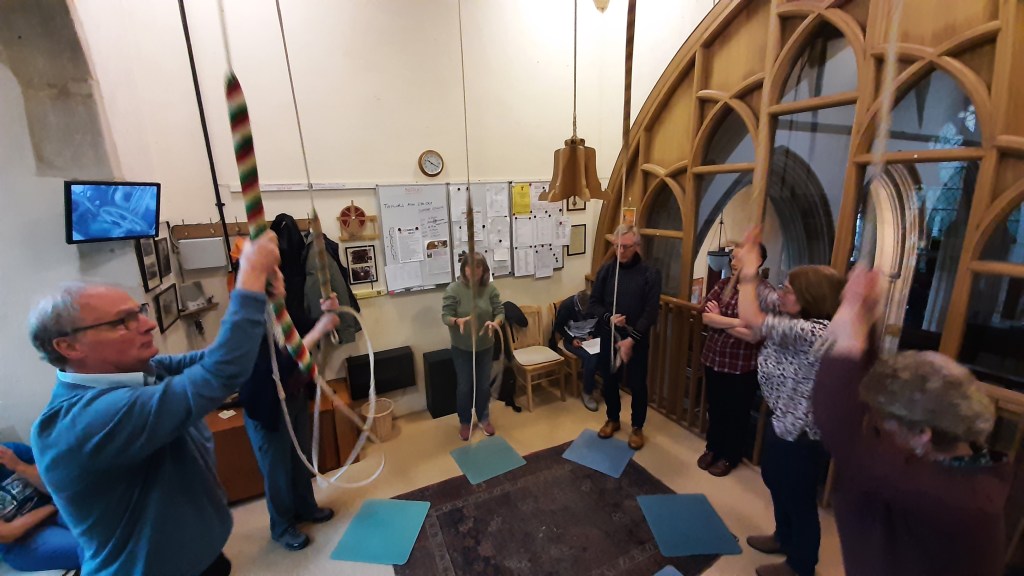
Hexham Abbey ringers
One of the ringers seemed familiar and it turned out to be Karen McCleave (ne Reeves). Karen and Sheila rang their first peals together at Meldreth in 1978, and it was probably nearly as long ago that we had seen one another. She was keen to learn about my method of teaching learners to ring in ten lessons, which I was happy to share.
A half-term family get together (with Mark and Rebecca Banner) gave us the opportunity to ring a quarter peal at Gransden. Seeing the opportunity for some good ringing I invited Tom Ridgman (Haslingfield) and James Gamble (St Neots). I decided on ringing Cambridge and conducted it from the 5th, choosing a more interesting composition than the traditional WHW. We raised the bells in peal and the quarter peal took 43 minutes. A super ring down in peal followed and we all felt that we had done a good job. It was Mark’s 250th quarter peal on tower bells.
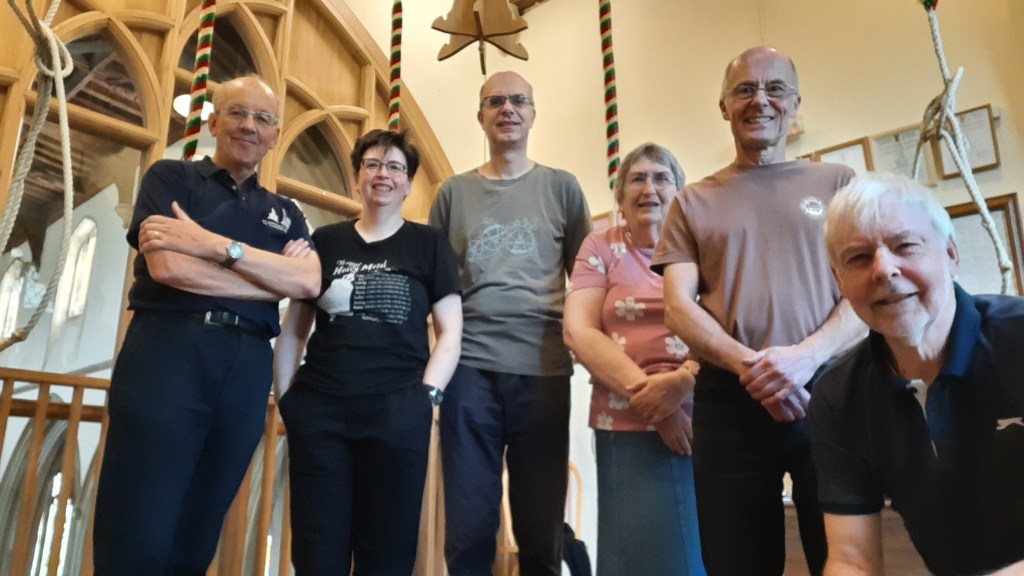
L-R: Tom, Rebecca, Mark, Sheila, James, Phillip
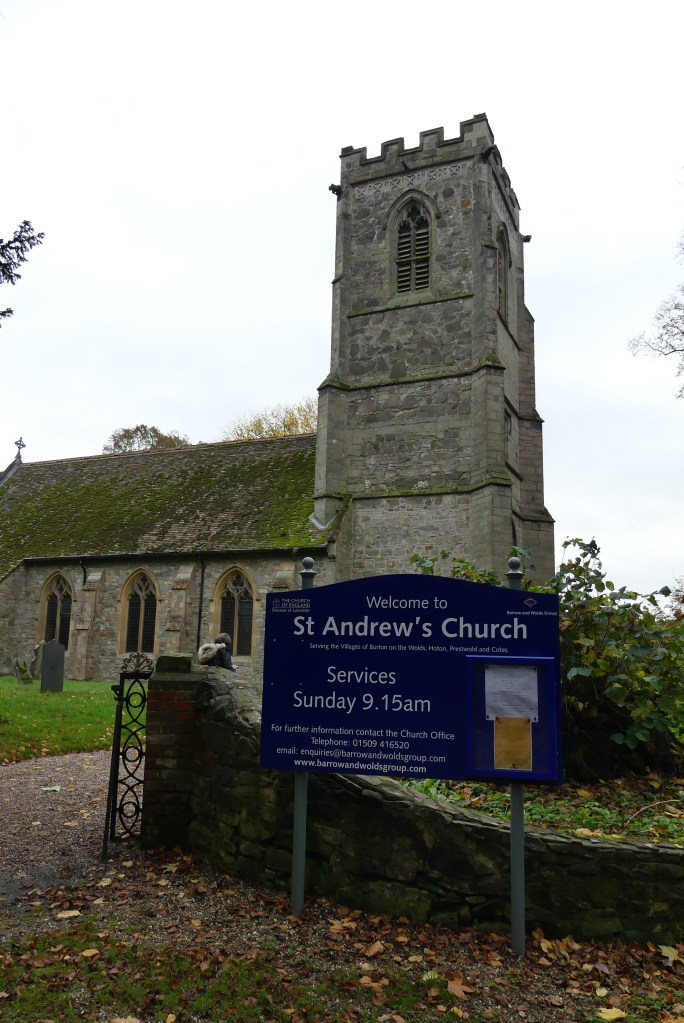
The next seasonal highlight was a trip to Taylor’s Bell Foundry in Lougborough, which was part of our autumn outing. We usually have two outings every year (one in the spring too), but on this occasion as the guided tour was 90 minutes we only rang at one tower in the morning. This was at St Andrew’s Church Prestwold (8. 10 1/2cwt), just a few minutes away from the foundry. We rang for 45 minutes, Rounds and Call Changes, and a bit of Cambridge S. Minor.
The weather was cool and cloudy and we decided that a planned for visit to Queen’s Park in Loughborough for a picnic lunch was not partciluarly attractive, so we stayed in the church. The church was very comfortable and we appreciated the hospitality shown by our host, Melanie Davis.
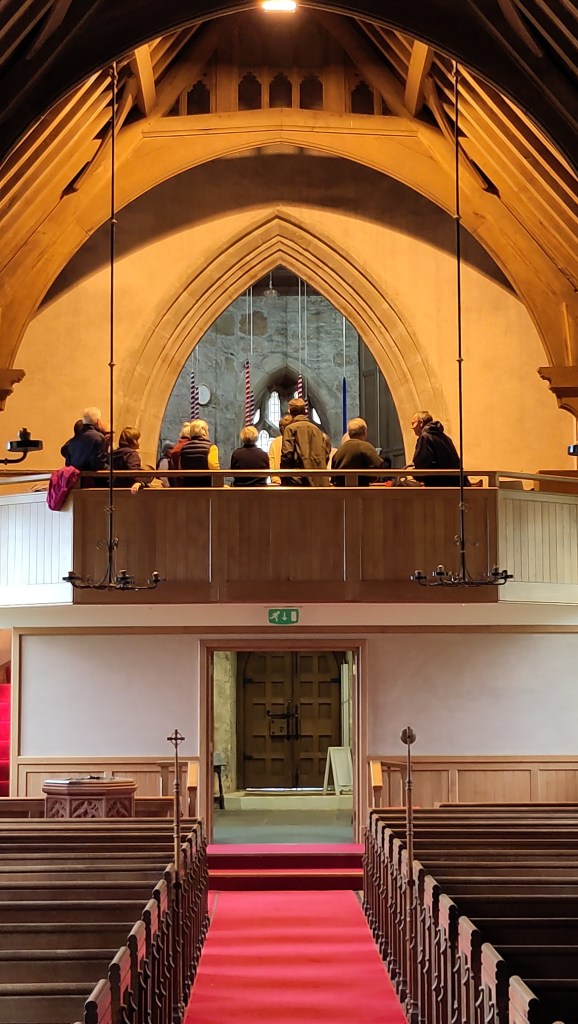
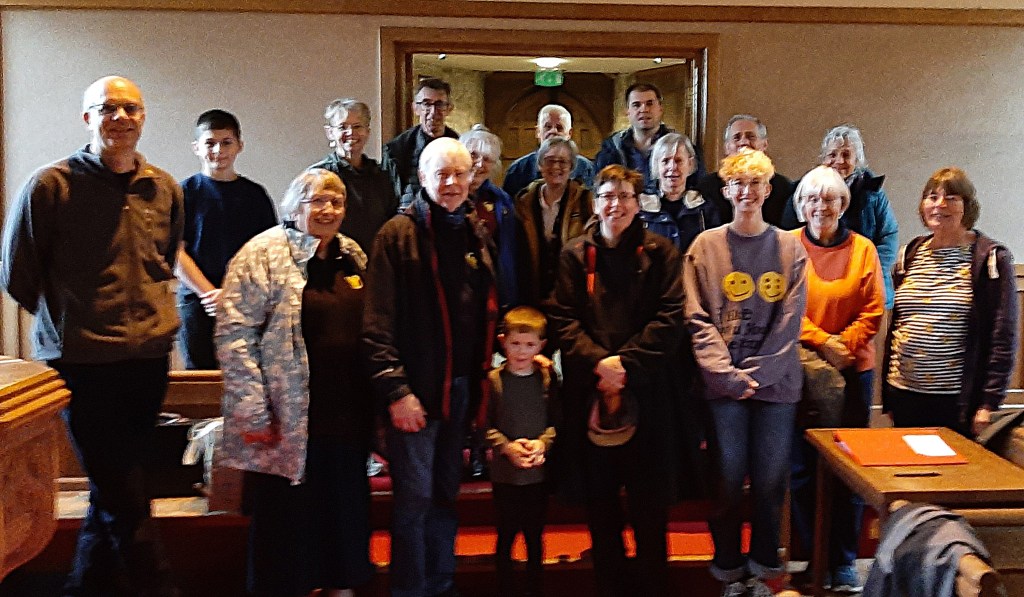
After lunch, handbells were rung by myself, Sheila George, Rebecca Banner, Mark Banner, Catherina Griffiths and Josh Crutch, to a variety of methods including Plain Bob, Single Oxford and St Clements.
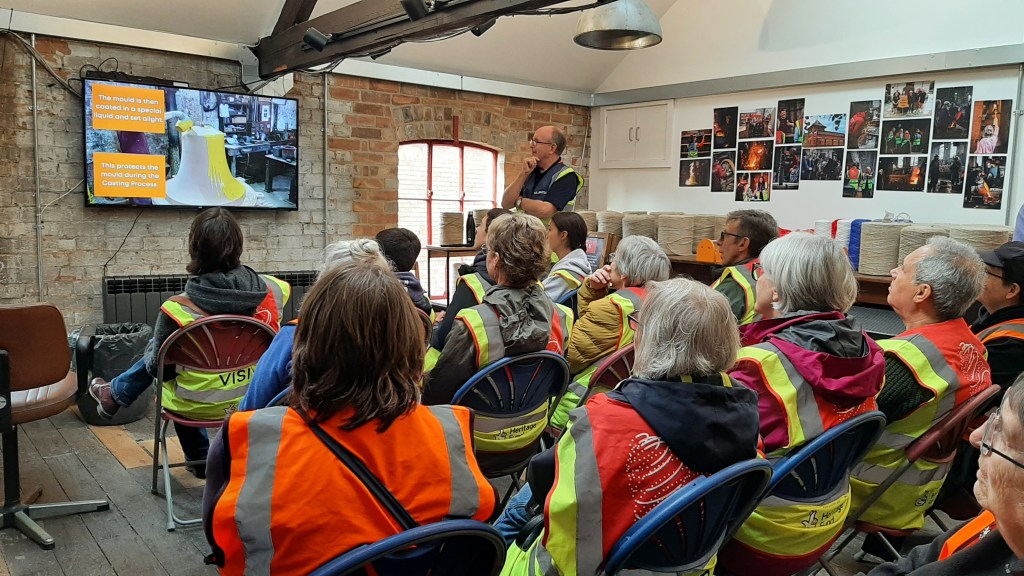
Our tour of the bell foundry was set for 1.30pm and we were greeted at the new reception area and provided with hi-viz jackets and given a safety briefing. It is a working foundry and care must be taken to adhere to the safety requirements.
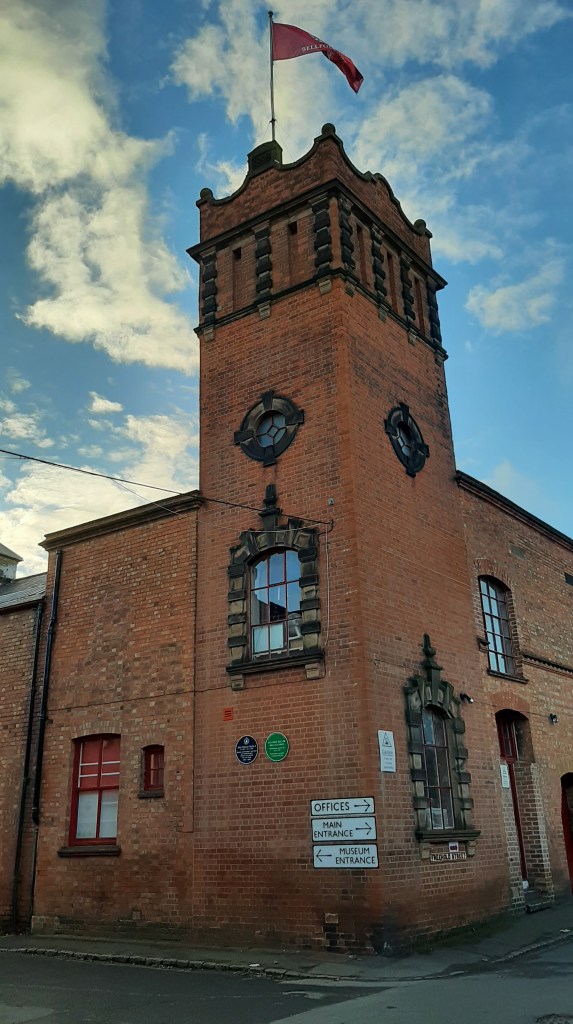
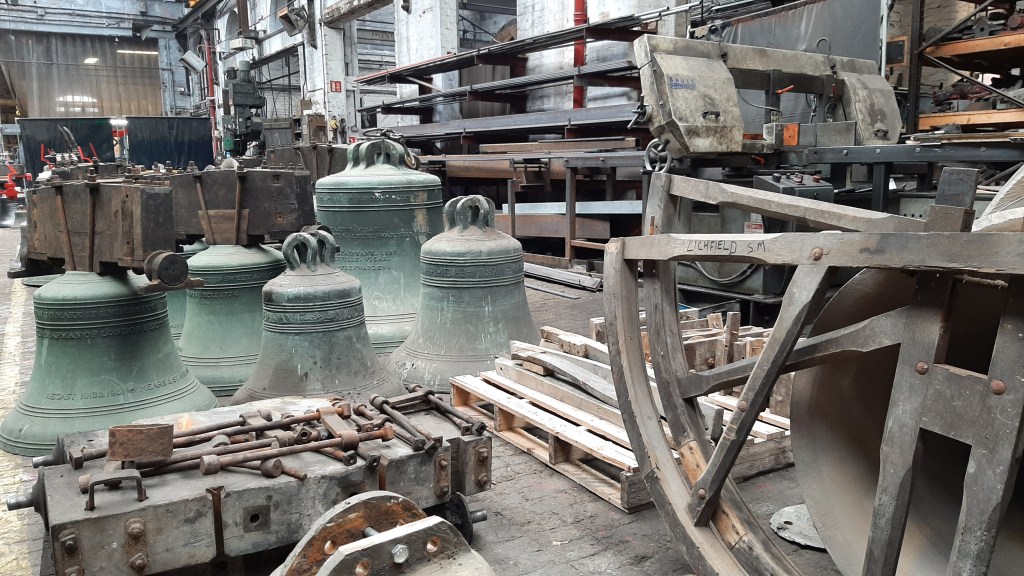

The tour began outside the buildings when the history of bell founding in Loughborough was explained. The Taylor foundry originated in St Neots in the 1780s by the then founder Joseph Earye. Subsequent foremen and apprentices moved the foundry to Oxford and then Devon before a commission to cast ten bells for Loughborough Parish Church brought John W Taylor to the town in 1839.
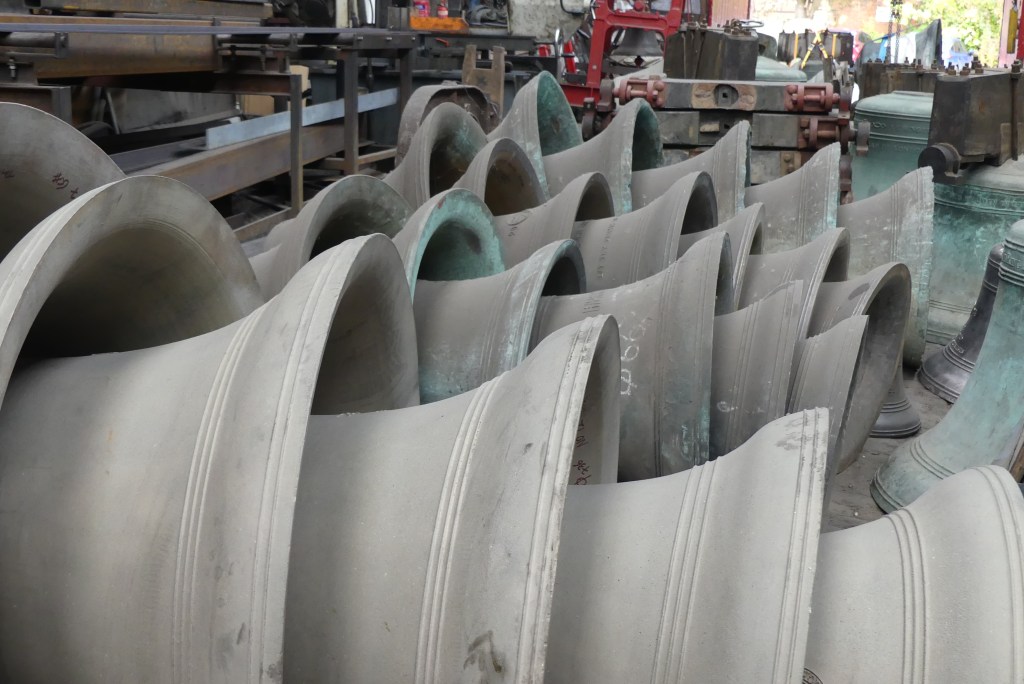
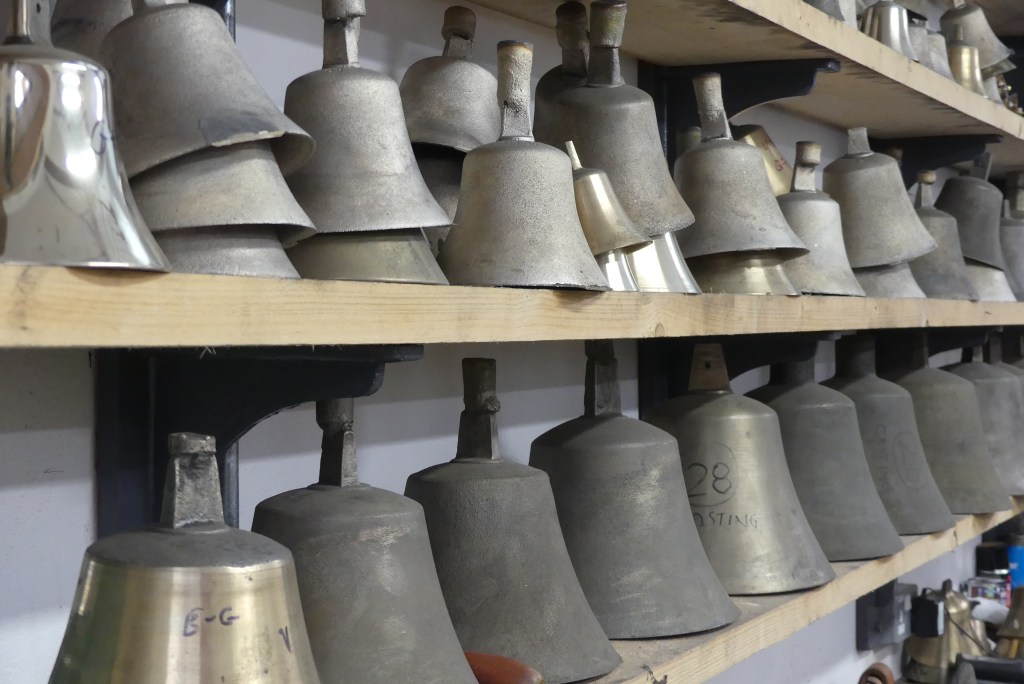
Although a grant from Historic England provided new reception buildings, the upgrading of the museum and other important improvements, the workshops remain busy industrial areas typical of a heavy engineering business and retain their former character and atmosphere.
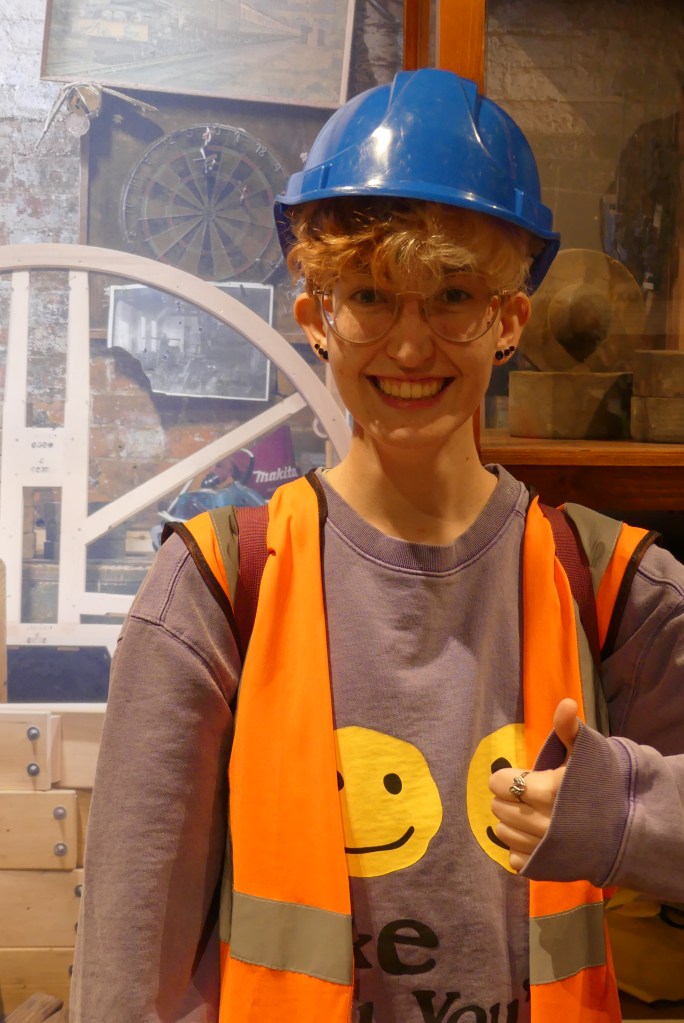
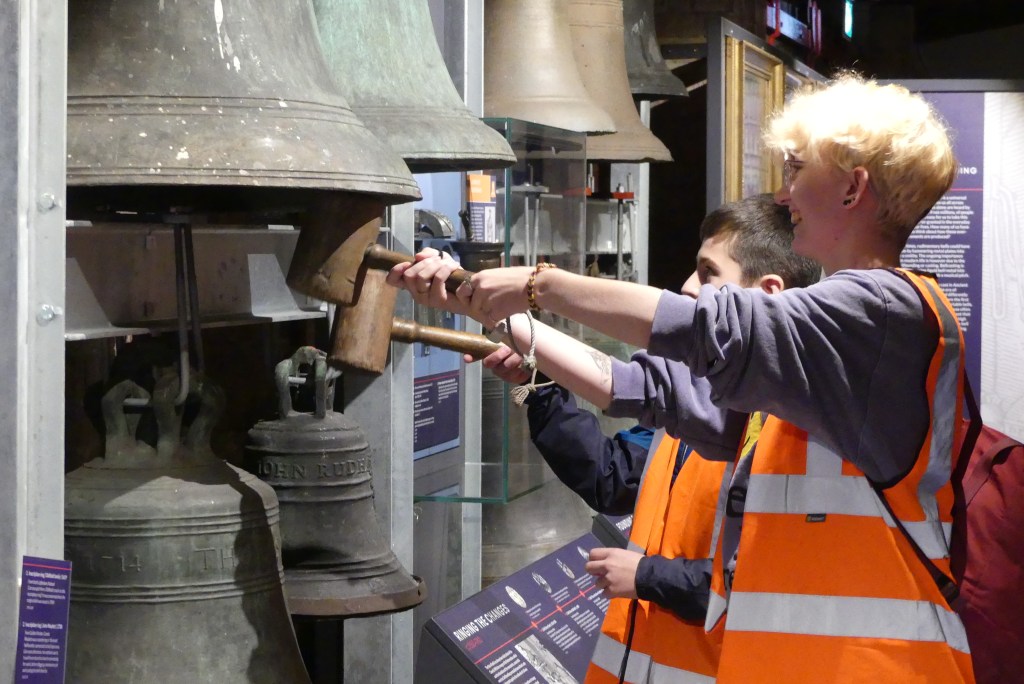
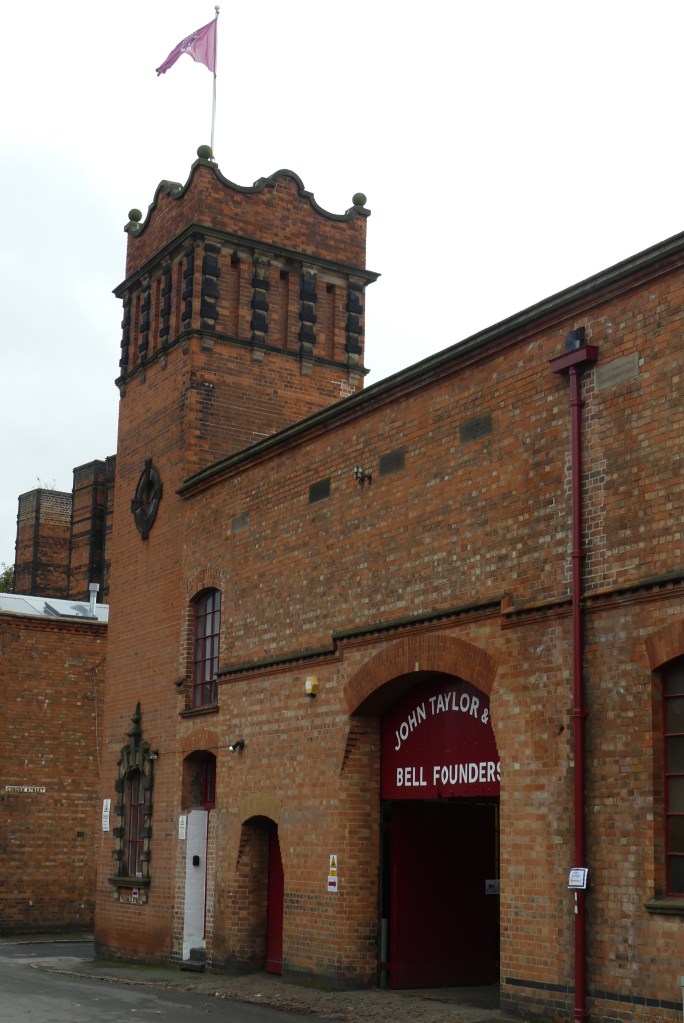
The tour included all areas, from the casting hall, the wheel shop, the handbell department and tuning area. Each part of the factory was described in detail and all our many questions were answered.
The final part of the tour was to the museum wher we could strike diferent bells and buy souvenirs before ringing on the 12 change-ringing bells (tenor 6 cwt).
We had an excellent day. Our thanks go to all the staff and volunteers at the bell foundry, and to St Andrew’s Church, Prestwold.
 Great Gransden Bell Ringers